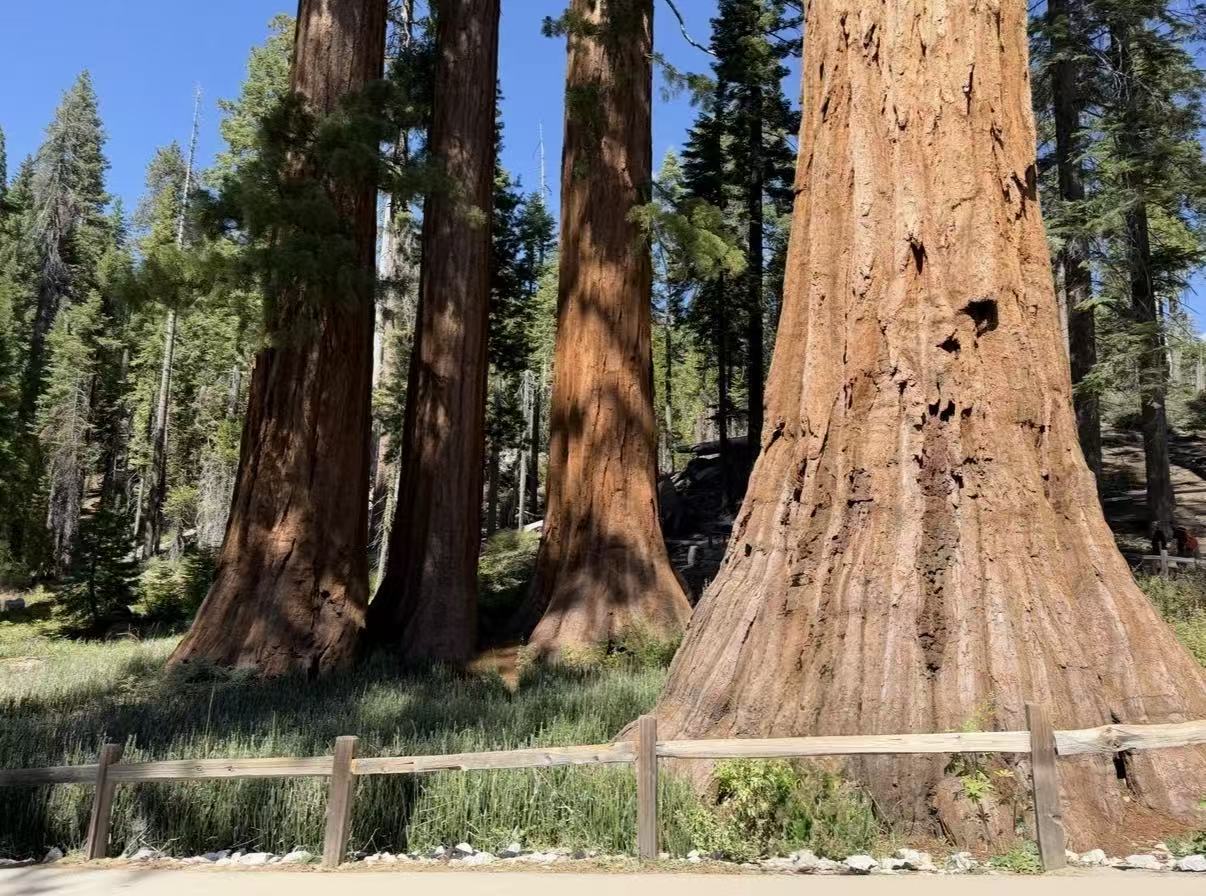
A friend of mine recently visited Yosemite National Park in California and took a photograph. In it, several magnificent sequoia trees rise from the forest floor, their massive trunks reaching high into the sky. Interestingly, these trees have names. One is called the Bachelor, while the other three are known as the Three Graces.
The names are said to draw inspiration from the Three Graces of ancient Greek and Roman mythology, goddesses associated with beauty, joy, and elegance. As for why the Bachelor happens to stand beside these three lovely ladies, no one seems to know. Perhaps he simply has an appreciation for both nature and beautiful women.
When I saw the photograph, I couldn’t help laughing. Suddenly, a song I had heard many years ago began playing in my mind. I vaguely remembered a few lines about peach blossoms filling the trees and magpies chirping cheerfully among the branches. But I couldn’t recall the song’s title, and most of the lyrics had slipped away. All I remembered was a hardworking young man in an orchard who had somehow captured the hearts of three sisters.
So I turned to ChatGPT.
At first, it couldn’t figure out the song either. But when I mentioned “the young man in the orchard” and “three sisters,” it finally made the connection. The song was Peach Blossom Romance (Tao Hua Yun), performed by the Chinese singer Yang Yuying.
Ha! As an old Chinese saying goes, “You can search far and wide for something, only to find it effortlessly in the end.” With a little help from ChatGPT, that was exactly what happened.
What amused me even more was that the young man from a Chinese orchard had somehow reappeared, in towering form, thousands of miles away in Yosemite.
One was a young man tending an orchard; the other, a bachelor standing in a forest. One was admired by three sisters; the other was surrounded by three Graces. Separated by an ocean, by language, and by culture, they seemed to be playing out remarkably similar stories—an unexpected coincidence that brought a smile to my face.
But what fascinated me most was something else entirely: my own memory.
I hadn’t heard Peach Blossom Romance in many years. I had even forgotten its name. Yet a photograph that seemed completely unrelated to the song had suddenly opened a door deep within my memory.
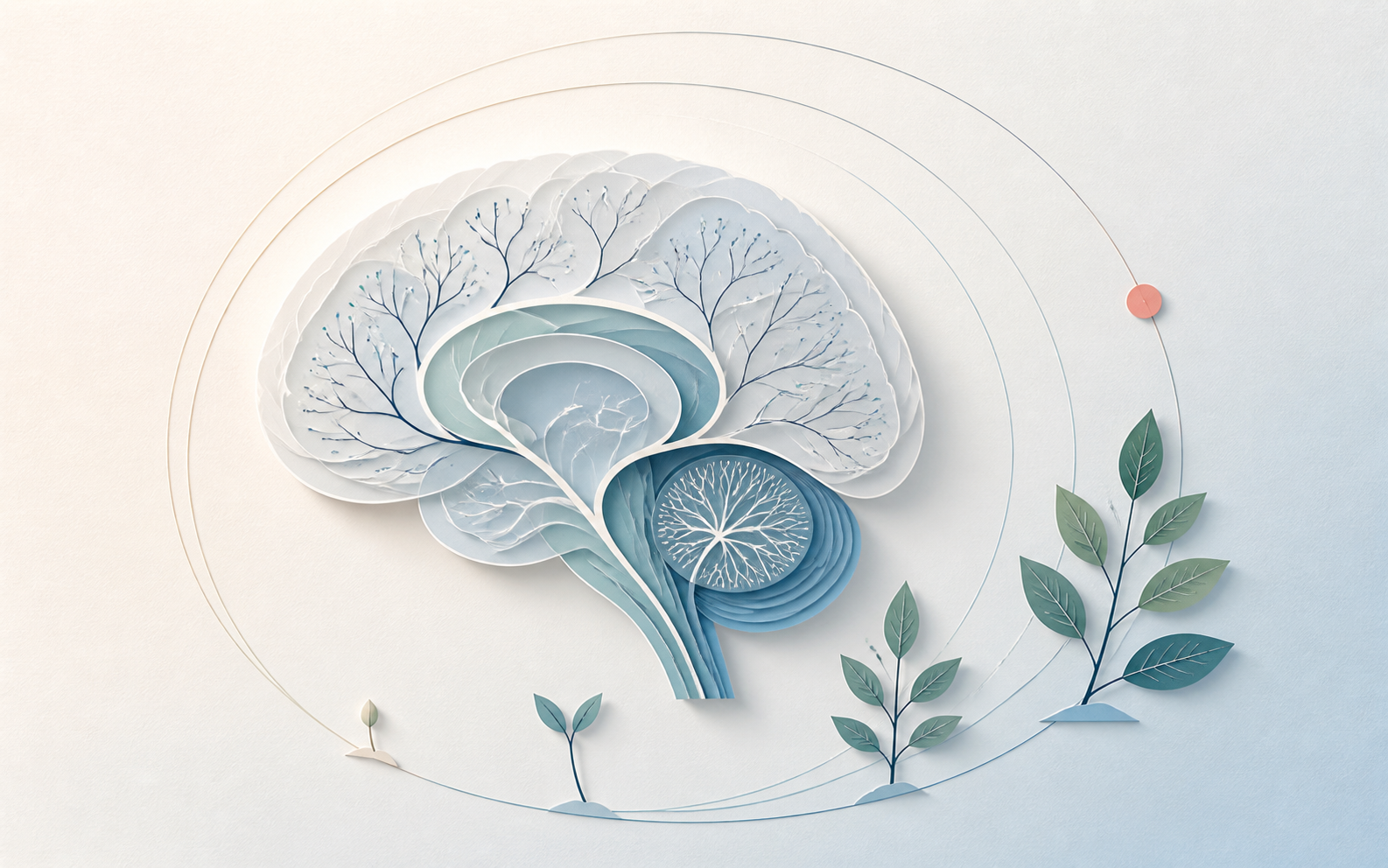
It reminded me that our brains do not store memories like books in a library, each neatly arranged on its own shelf. Instead, memory works more like an interconnected network. An image, a scent, a melody, or even a casually spoken phrase can become the key that unlocks a long-forgotten memory.
In neuroscience, this phenomenon is related to associative memory. When we encounter something familiar, the brain may follow connections established through past experiences, reactivating memories linked to what we see, hear, or feel.
Music is especially remarkable in this regard.
Sometimes we forget the title of a song but still remember its melody. We may no longer recall all the lyrics, yet find ourselves humming a few familiar lines. And when a long-forgotten song begins to play again, the emotions we felt when we first heard it may return as well.
This is one reason music can be so powerful in bringing back memories for older adults. Even for some people living with Alzheimer’s disease, familiar music may help awaken memories and rekindle emotions that seem to have faded.
Of course, music cannot reverse the neurodegenerative changes caused by Alzheimer’s disease. But it can sometimes serve as a bridge—connecting memory, emotion, and human relationships.
With these thoughts in mind, I looked once more at my friend’s photograph.
Sunlight filtered through the towering sequoias, gently illuminating the forest floor. The Bachelor still stood quietly beside the Three Graces. They had probably been standing together like this for many years.
I wondered how many visitors had walked beneath their branches, and how many had smiled upon discovering their amusing names.
And there I was, thousands of miles away in Atlanta, rediscovering a song from long ago—all because of these trees.
Who would have thought that memory could work in such mysterious and wonderful ways?
Sometimes, we believe we have forgotten something forever. But perhaps it has simply been resting quietly in a hidden corner of our minds, waiting for an unexpected moment to find its way back to us.
(Photo courtesy of a friend. Used with permission.)