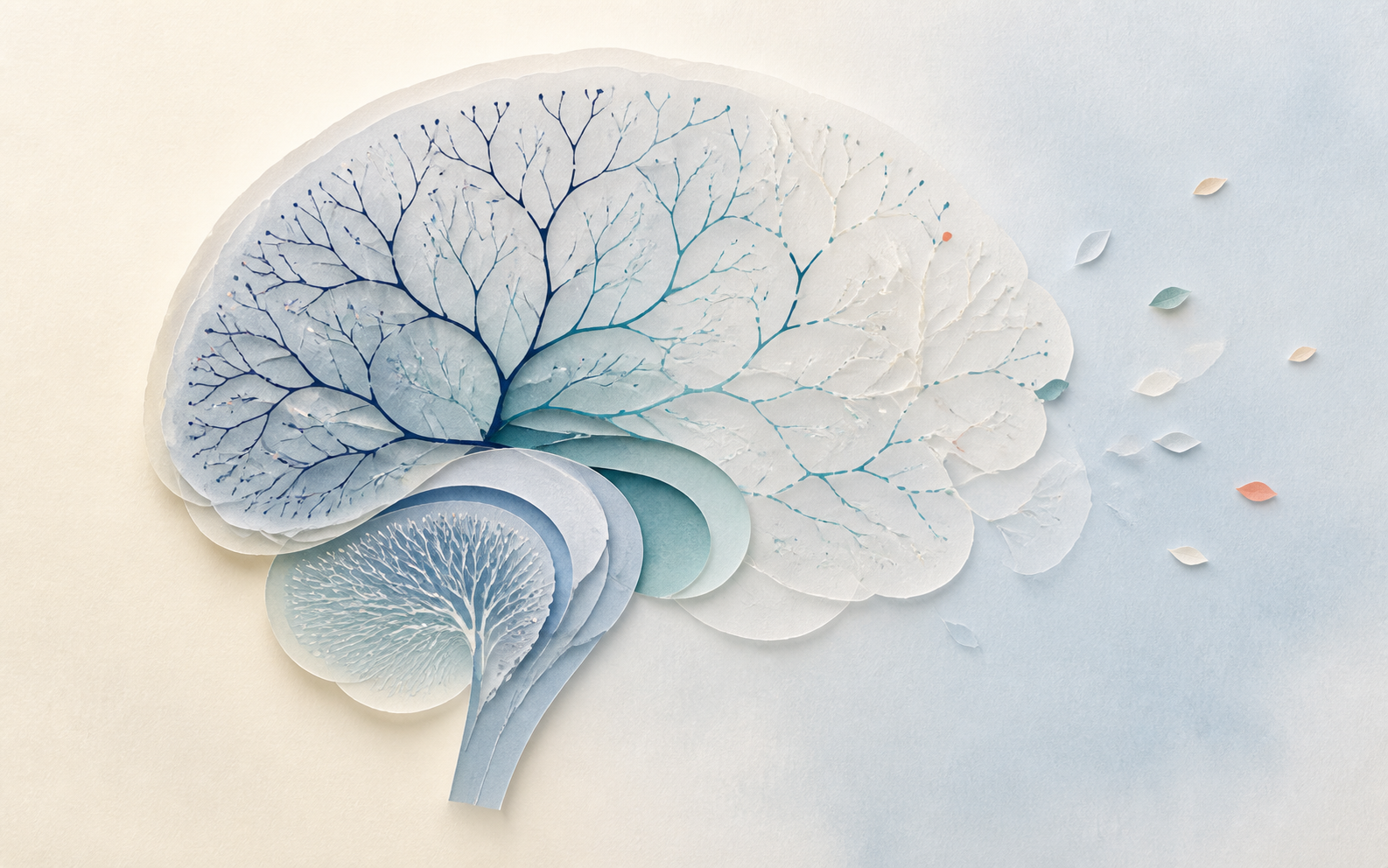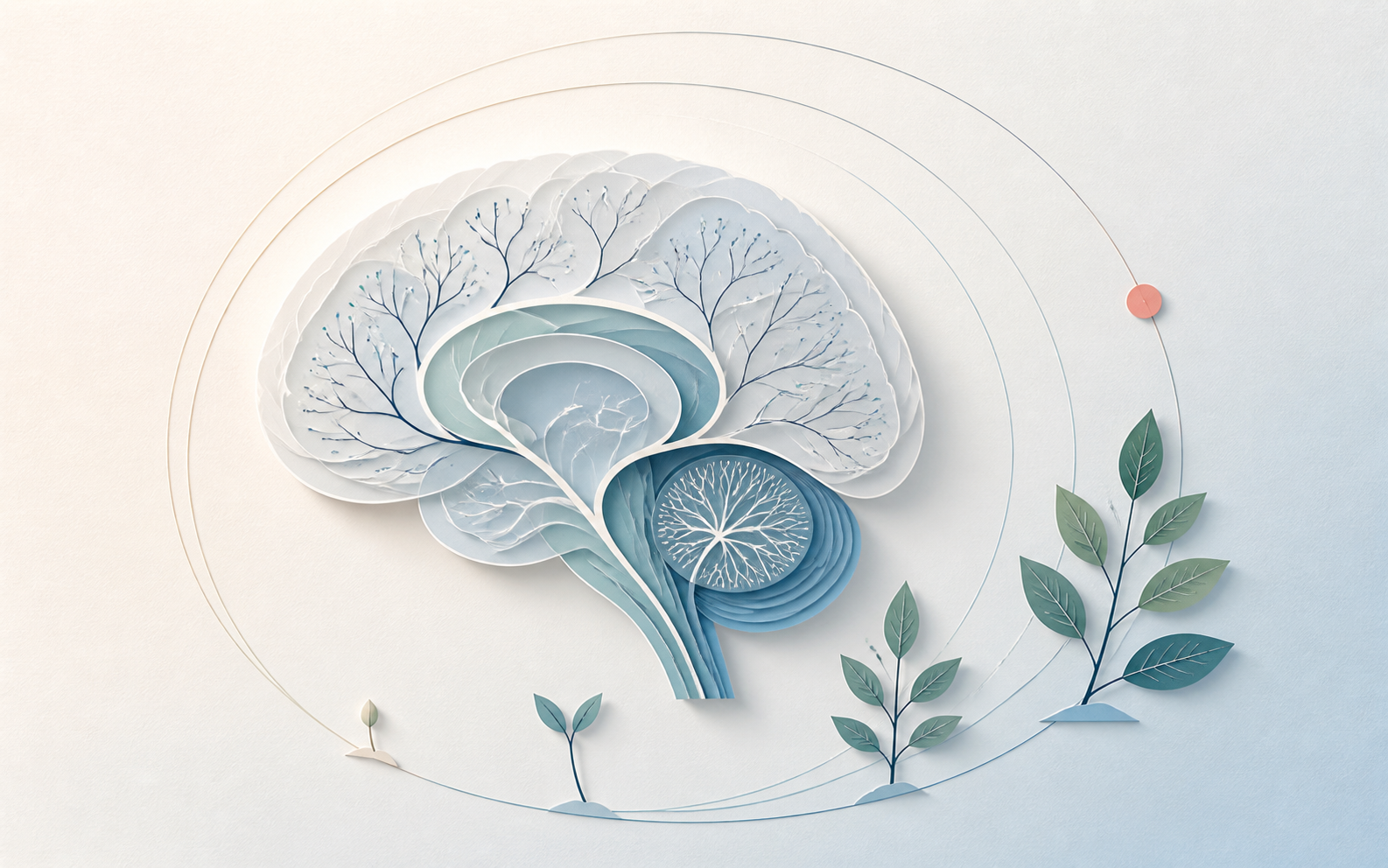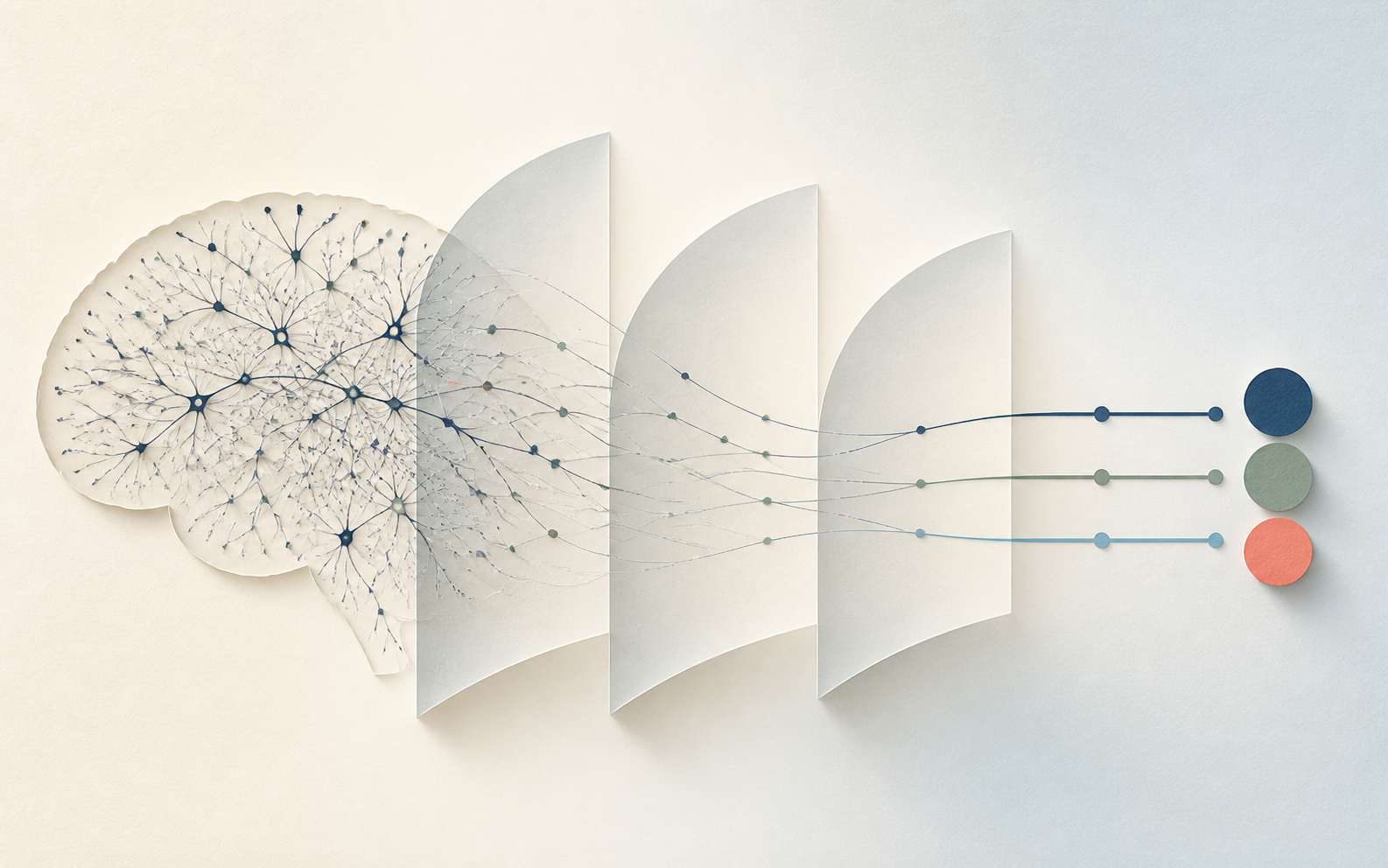
Healing does not always look like a dramatic return to the life we had before.
Sometimes it is quieter.
It may be the first morning when music feels beautiful again. The moment sunlight falls across a hospital wall. A slow walk beneath trees after weeks spent indoors. The decision to pick up a pencil, touch clay, water a plant, or sit beside an open window.
These moments do not erase illness, grief, trauma, or exhaustion. They do not replace medicine, rehabilitation, psychotherapy, or practical support.
But they can create something recovery often needs: a little more room to breathe.
Research across the arts, psychology, public health, and environmental science suggests that creative activity and contact with nature may support well-being, reduce certain forms of distress, encourage social connection, and help people reconnect with meaning.123
The evidence is promising but not magical. Results vary among people and studies, and many questions remain.
Still, the central idea is deeply human:
Beauty may not cure the wound, but it can help us live beside it while healing begins.
Art gives experience another language
Illness and grief do not always fit easily into words.
A person may know that something hurts without knowing how to describe it. They may feel afraid, angry, numb, relieved, guilty, or several of these at once. Repeatedly explaining such feelings can become exhausting.
Art offers another way to hold experience.
A color can carry a mood. A rhythm can organize a restless body. A photograph can preserve something that feels at risk of being lost. A poem can say indirectly what feels impossible to say aloud.
The value is not necessarily in producing something beautiful. It is in giving form to something that previously had no place to go.
The World Health Organization's broad review of arts and health research examined activities including music, singing, dance, visual art, reading, writing, theater, and cultural participation. It found evidence that the arts may contribute to prevention, health promotion, management of illness, and treatment support across the lifespan.1
The review also makes clear that "the arts" are not one uniform intervention. Listening to a familiar song is different from working with a trained music therapist. Visiting a museum is different from participating in clinical art therapy. Painting alone is different from creating in a supportive group.
Each may offer something valuable, but they should not be treated as interchangeable or promised to produce the same result.
Creating can restore a sense of choice
Illness can make life feel organized by other people.
Appointments decide the day. Symptoms decide what is possible. Medical instructions, test results, and caregiving routines can leave little room for spontaneity or control.
Creative activity can return a small measure of choice.
Which color will you use? Where will the line go? Which song feels right today? Will you keep what you made, change it, share it, or set it aside?
These decisions may seem small, but agency matters. Recovery is not only about what happens to the body. It is also about whether a person still feels able to participate in their own life.
A 2024 systematic review of "Arts on Prescription" programs found improvements in reported well-being across participating studies, with recurring themes of belonging, confidence, respite from demands, and social connection.2 The researchers also emphasized important limitations: programs differed widely, study quality varied, and long-term evidence remained limited.
The honest conclusion is not that art works for everyone.
It is that creative participation can offer a meaningful form of support—especially when it is accessible, voluntary, and free from pressure to perform.
Music can meet us where words cannot
Music enters the brain and body through several pathways at once. It engages hearing, attention, memory, movement, expectation, and emotion.
A familiar song may bring back a place, a relationship, or a version of ourselves that illness seemed to hide. Rhythm can invite movement. Singing can lengthen the breath. Music shared with another person can create connection without requiring conversation.
A 2025 systematic review and multilevel meta-analysis found that professionally delivered music therapy was associated with reduced self-reported anxiety across a variety of clinical and other settings.4 The effects on physiological measures were less certain, and the authors noted that longer-term outcomes require further research.
Music therapy is a clinical practice delivered by a qualified professional. It is not the same as listening to music at home.
But ordinary listening can still be personally meaningful. The right music may provide familiarity, comfort, energy, or companionship.
The word "right" matters. A song that calms one person may overwhelm another. Music tied to loss may bring grief rather than relief. Silence may sometimes be kinder.
Healing is not created by sound alone. It begins with attention to what this particular person needs.
Nature can soften the demand to perform
Modern life asks for sustained attention.
Screens flash, alarms sound, messages arrive, and the mind is repeatedly asked to decide, respond, and ignore distractions. Illness adds another layer of monitoring: symptoms, schedules, medication, risk, and uncertainty.
Natural settings often ask for a different kind of attention.
Leaves move without demanding a response. Water changes without needing to be solved. Clouds pass whether or not we are watching. Researchers sometimes describe this as "soft fascination"—an environment holding attention gently enough that effortful concentration may rest.
Systematic reviews have reported some evidence that exposure to natural environments can support aspects of attention and psychological restoration, although findings differ depending on the outcome measured, study design, setting, and duration of exposure.5
Research on nature-based interventions has also found reductions in anxiety, depressive symptoms, negative affect, and heart rate, together with increases in relaxation and positive affect.3 However, a major 2026 overview noted that many studies used passive comparison groups and inconsistent definitions, limiting claims about how nature interventions compare with other helpful activities.
Nature appears supportive.
It should not be marketed as a guaranteed prescription.
Nature does not have to mean wilderness
The idea of "spending time in nature" can sound inaccessible.
Not everyone lives near forests or oceans. A person may have limited mobility, chronic pain, allergies, sensory sensitivities, safety concerns, or no easy transportation. Public green space is also distributed unequally.
Nature can begin much closer.
It may be a tree visible from a window, herbs growing on a kitchen ledge, birds heard in the morning, sunlight on the floor, or a small garden near a clinic. It may be listening to rain, touching smooth stones, arranging flowers, or watching the changing light.
These experiences are not identical to walking through a forest, and research should not pretend they are. But healing does not need to become another ideal that excludes people.
The purpose is not to prove that you have spent enough time outdoors.
It is to notice whether some form of the living world helps you feel more present, settled, or connected.
Stillness is not the same as doing nothing
Recovery often requires effort: appointments, exercises, difficult conversations, new routines, and the repeated work of adapting.
But constant effort can become its own form of exhaustion.
Stillness offers a pause in which the nervous system is not being asked to fix, explain, or accomplish.
This might mean sitting in a quiet garden, watching light move across a wall, listening to one piece of music without multitasking, or spending several minutes with a painting.
Stillness does not need to mean meditation. For some people—particularly those living with trauma, pain, intrusive thoughts, or severe anxiety—silence and inward focus may feel uncomfortable rather than peaceful.
A gentle activity may be more regulating: knitting, walking, sketching, folding paper, watering plants, or listening to a trusted voice.
There is no moral superiority in being still.
The question is simply: What allows your mind and body to feel safe enough to loosen their grip for a moment?
Beauty can widen a life narrowed by illness
Illness has a way of making the world smaller.
Conversation turns toward symptoms. Calendars fill with appointments. Rooms become organized around medication and equipment. A person may begin to feel that their body is a problem to be managed rather than a life being lived.
Beauty interrupts that narrowing.
A painting does not ask for a diagnosis. A garden does not require an explanation. A piece of music may reach the person before it reaches the patient.
This does not mean beauty must always be cheerful.
Art can hold sorrow, uncertainty, anger, and loss. Nature includes winter, decay, storms, and darkness as well as flowers and sunlight. Sometimes what comforts us is not prettiness but recognition—the feeling that the outside world contains a shape for what we are experiencing inside.
Beauty can remind us that life remains larger than the medical story currently occupying it.
Healing can happen with other people
Art and nature can offer solitude, but they can also create companionship.
A choir, gardening group, museum visit, craft table, community class, or shared walk provides something beyond the activity itself. It gives people a reason to gather that is not centered entirely on illness.
Community-based arts research frequently identifies belonging, reduced isolation, shared purpose, and a growing sense of identity among participants.26
A person can become more than "the patient," "the caregiver," or "the bereaved one." They can also be the person who sings harmony, grows tomatoes, notices birds, writes stories, or mixes an unforgettable shade of blue.
Recovery is often supported by being witnessed in more than one role.
Small encounters are enough
Art and nature should not become another demanding wellness routine.
You do not need an expensive class, a distant retreat, or artistic talent. You do not need to make something worthy of display.
You might:
- Listen closely to one song
- Place a chair near a window
- Photograph something beautiful on an ordinary walk
- Draw without showing anyone
- Read a poem slowly
- Keep a small plant
- Visit a library, park, garden, gallery, or place of worship
- Make something with your hands
- Sit beside someone without needing to speak
Try one small encounter and notice what happens.
Do you breathe differently? Does time feel less urgent? Does a memory return? Do you feel more connected—or simply less crowded inside?
If nothing changes, that is all right. Healing is not a test, and beauty is not medicine that must work on schedule.
Support, not substitution
Art, nature, and stillness can accompany healthcare. They should not be used to dismiss symptoms, delay treatment, or suggest that a person could recover if only they had a more positive attitude.
Severe depression, anxiety, trauma, cognitive change, persistent pain, and other health concerns deserve qualified professional care.
Creative and nature-based practices may sit beside that care. They can help a person tolerate a difficult day, communicate an experience, reconnect with the body, or remember what still feels meaningful.
Their value is often quiet rather than curative.
They do not always remove suffering.
Sometimes they help us feel less alone inside it.
A place for the mind to return
Healing is rarely a straight line. There may be progress, setbacks, long pauses, and changes that cannot be reversed.
Yet even when cure is not possible, moments of restoration may still be.
A song can remain. A tree can change with the seasons. A hand can shape clay. Light can reach the room.
These experiences do not ask us to deny what hurts. They remind us that pain is not the only thing present.
Beauty gives attention somewhere gentle to rest.
Stillness gives the body permission to stop bracing.
Nature reminds us that change can include loss, adaptation, renewal, and return.
None of these promises to make us whole in the way we once were.
Perhaps healing sometimes means discovering that life can still hold meaning, connection, and beauty in the shape it has now.
References
- Fancourt, D., & Finn, S. (2019). What is the evidence on the role of the arts in improving health and well-being? A scoping review. World Health Organization Regional Office for Europe. who.int
- Jensen, A., Holt, N., Honda, S., & Bungay, H. (2024). The impact of arts on prescription on individual health and wellbeing: A systematic review with meta-analysis. Frontiers in Public Health, 12, 1412306. https://doi.org/10.3389/fpubh.2024.1412306
- Saeedy Robat, E., Bayazi, M. H., Nayyeri, M., Yasaghi, A. A., & Taimory, S. (2026). A systematic overview and second-order meta-analysis of nature-based interventions for stress, anxiety and depression. Nature Human Behaviour. https://doi.org/10.1038/s41562-026-02433-4
- De Witte, M., Aalbers, S., Vink, A., et al. (2025). Music therapy for the treatment of anxiety: A systematic review with multilevel meta-analyses. EClinicalMedicine, 84, 103293. https://doi.org/10.1016/j.eclinm.2025.103293
- Ohly, H., White, M. P., Wheeler, B. W., et al. (2018). Attention Restoration Theory II: A systematic review to clarify attention processes affected by exposure to natural environments. Journal of Toxicology and Environmental Health, Part B, 21(4), 227–268. https://doi.org/10.1080/10937404.2018.1505571
- McQuade, L., & O'Sullivan, R. (2024). Community-based art groups in mental health recovery: A systematic review and narrative synthesis. Journal of Psychiatric and Mental Health Nursing, 31(2), 158–173. https://pubmed.ncbi.nlm.nih.gov/37638556/
- Paredes-Céspedes, D. M., Vélez, N., Parada-López, A., et al. (2024). The effects of nature exposure therapies on stress, depression, and anxiety levels: A systematic review. European Journal of Investigation in Health, Psychology and Education, 14(3), 609–622. https://doi.org/10.3390/ejihpe14030040